
News


News from our business partners
This is a guest blog by REC Business Partner, Paul Waters Associates
A strong CV can tell you what someone has done. It tells you less about the conditions in which they work well, what motivates them or the support they need. Those questions matter whether you are hiring an administrator, engineer, manager or salesperson.
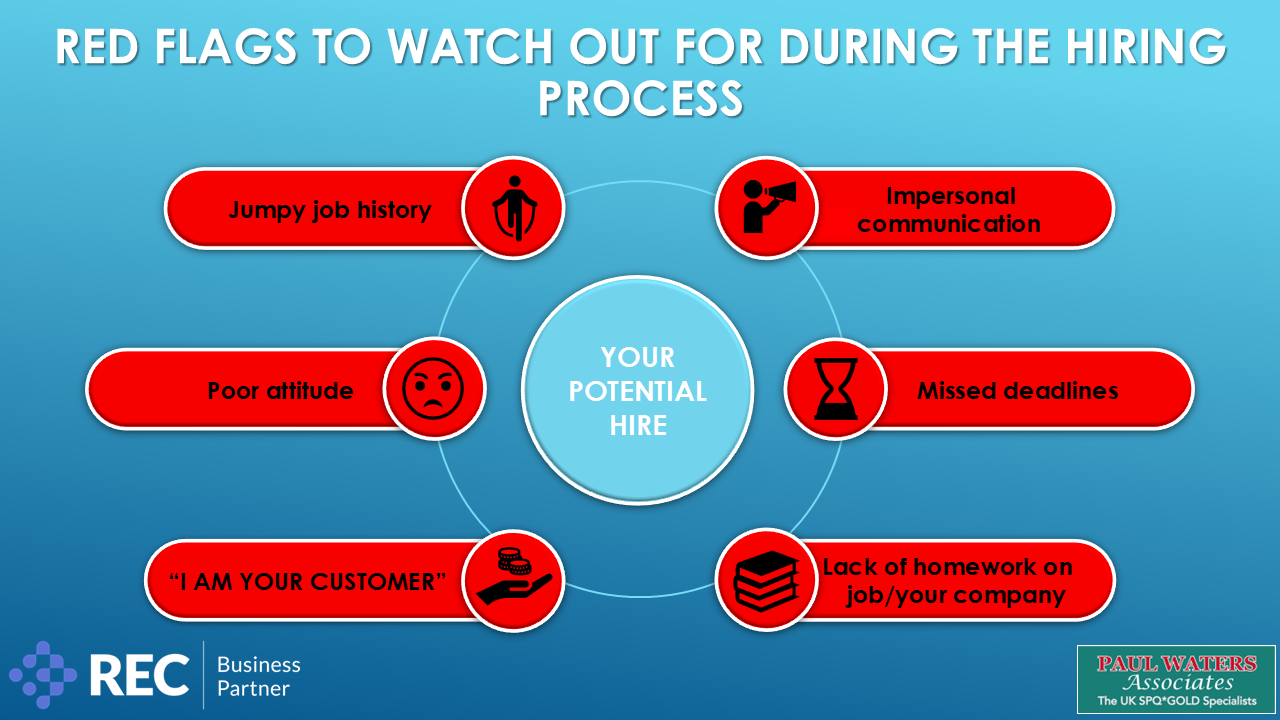
The red flags above are prompts to investigate. Frequent job changes may reflect fixed-term contracts; a missed deadline may have a reasonable explanation. Nervousness, eye contact or an unfamiliar communication style should not become shorthand for poor capability. Asking about pay or flexibility is legitimate.
Describe the specific concern, explain its relevance to the job and give the candidate space to respond. Check whether unclear instructions or an inaccessible process contributed before drawing conclusions.
Agree essential requirements before advertising. Ask applicants for relevant examples, explain the selection stages and invite requests for reasonable adjustments. Use consistent core questions and scoring criteria, supported by a short, realistic work sample. Assess job requirements without expecting everyone to resemble the existing team.
Alongside technical questions, ask:
Probe for actions and outcomes. Allow examples from study, volunteering or other responsibilities where employment experience is limited.
At Paul Waters Associates, we use the Career Styles Inventory (CSI) to explore broader workplace preferences and motivational drivers. It can inform conversations about how someone prefers to work, communicate and be managed, and what they value in recognition, reward or development. Those questions apply across sales and non-sales roles.
SPQ*GOLD adds a different perspective where selling is part of the job: potential barriers to initiating contact, prospecting and sustaining sales activity. Select the assessment around the role and the question you need answered. Neither replaces evidence of skills, structured interviews or appropriate references.
As an illustrative example, an operations employee might value clear priorities and regular feedback, while their manager assumes independence is the best reward. CSI can help open that discussion. Explore the findings with the individual and agree a workable approach; do not treat a preference as an inability.
Carry the agreed support into onboarding, with specific review points. Check performance and ask whether expectations, feedback and development are working. Track retention over time rather than assuming the assessment itself caused an improvement.
To discuss using CSI or SPQ*GOLD in hiring and employee development, contact Paul Waters Associates.
Share this article